
Every country has news consumers—and news avoiders—who are media illiterate. OJ-UGANDA’s media literacy section exists to change that. Follow along.

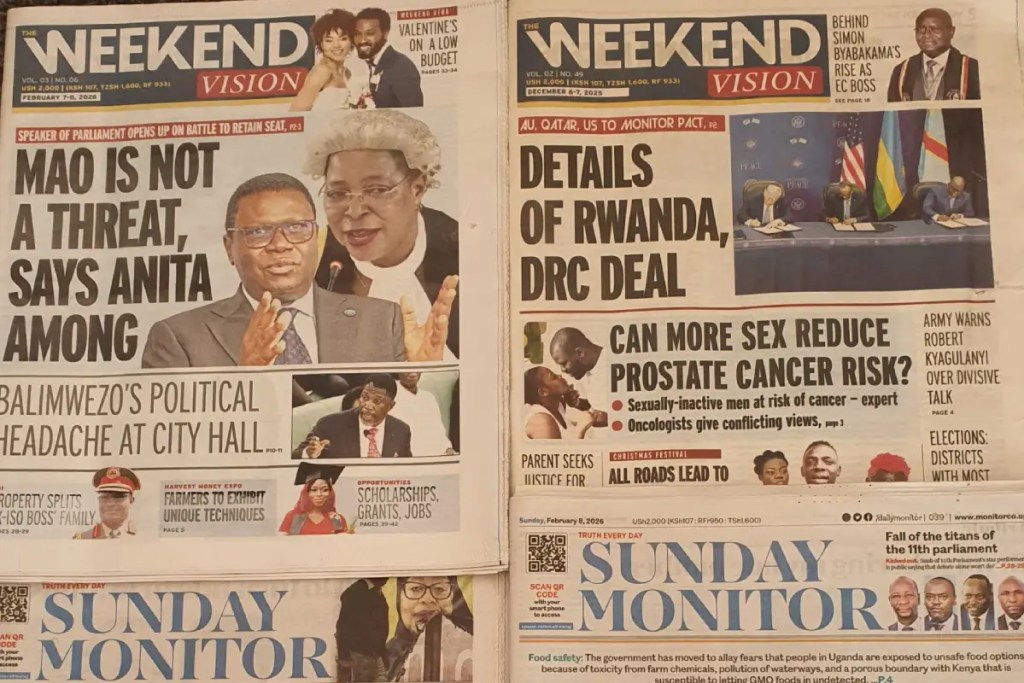
Sometimes news consumers are pressed for time and do not pay close attention to what they read. And occasionally, reporters leave unidentified names in quotations, which can be as damaging as a factual error.
That is why many news outlets with strong journalism standards ask reporters to add an explanatory phrase to help readers fully understand a quotation.
This example from a New York Times news article published on February 24 about Mexico illustrates the point.
“The question always was: Is Claudia going to emerge from AMLO’s shadow?” Mr Feeley said, referring to Mr. López Obrador by his initials.
Andrés Manuel López Obrador (AMLO) is a former Mexican president. Claudia Sheinbaum is the current president of Mexico. A reader who started from the beginning will already have seen her full name. But without explanation after “said,” many readers will not know what AMLO means unless they follow Mexican politics closely.
DIVE INTO OUR PREVIOUS READS
Consider a quotation in which President Yoweri Museveni says a decision was made “as I had agreed with Ramadhan.” Then you encounter stories that use the quotation but provide no further identification. No title. No role. No explanation of why this person matters.
A careful, discerning reader immediately asks: Who is Ramadhan? A minister? A technocrat? A relative? A business associate? A political broker?
This kind of reporting shifts journalism from informing the public to confusing it.
Media literacy equips readers with the ability to detect bias or misinformation in what journalists are reporting. But one of its most practical skills is simpler: notice what is missing.
An unidentified actor in a story raises deeper issues than mere substandard reporting.

First, it obscures accountability. If a public decision was made “in agreement” with someone, that person is part of the decision-making chain. Failing to identify them hides who holds influence.
Second, it creates “insider journalism”—reporting written as if for people already familiar with the players. Good journalism assumes the opposite: that the reader is intelligent but uninformed.
Third, omissions can subtly alter interpretation. If the unnamed “Ramadhan” is, for example, a senior finance official such as Ramathan Ggoobi, the story signals Treasury involvement in a matter concerning Uganda Airlines. If he is a political adviser, the implication is different. Identity changes meaning.
This is why professional newsrooms enforce a basic rule: never introduce a person without identifying them at first reference. Name the person and their title. Always.
The discipline exists because readers cannot evaluate information without context. A quote is not self-explanatory; it sits inside a network of power, institutions and interests.
Six reasons you should trust what you read on this website—and share it with confidence
1. Led by experience that travels well
Our founder and editorial director, Musaazi NAMITI, brings more than two decades of serious newsroom experience, including eight years as an editor at Al Jazeera in Doha, Qatar, and consulting for the African Development Bank, UN agencies and Globe Media Asia in Cambodia. His global exposure anchors OJ-UGANDA.COM in professional rigour and fairness—standards that too often slip in Uganda’s crowded media space.
2. We fact-check with scientific precision
Verification is NOT a box we tick; it is how we bring journalism to life. We confirm spellings, dates, figures, places—every detail that shapes a story. If a fact looks shaky, we pause and probe. Emotion does not lead us; evidence does.
3. We are a legal entity and are fully registered
OJ-UGANDA.COM is a company registered with the Uganda Registration Services Bureau. Our registration number is: 80034266163714
4. Radical transparency in how we work
We do not hide behind mystery. We show readers how information is gathered, verified and edited. You will always understand why we stand by a story—because we will let you in on the process.
5. Accountability you can see
When we err, we do not sweep it under the carpet/rug. Our corrections policy ensures every error is corrected immediately, with a clear note explaining what went wrong and what has been fixed. No quiet deletions. No half-truths.
6. Fair treatment for contributors
If you write for us, your ideas remain yours. We refine, not usurp. We share every edited version before publication, and we publish only work that is fact-based and mutually agreed upon. Your voice stays authentic—and honest.
🔴We run a clean, professional news site that prioritises editorial quality and draws readers’ attention to what matters.
Even when the quotation comes from the highest authority—such as President Yoweri Museveni regarding leadership changes at Uganda Airlines—the obligation remains. Authority does not substitute for clarity.
For readers, the lesson is equally important. When you encounter a story that assumes knowledge you do not have, pause and interrogate it:
Who is being mentioned but not explained? What role do they play? Why might their identity matter to the decision described?
These questions transform passive consumption into active reading.
In an age of information overload, media literacy is not just about spotting falsehoods. It is about detecting gaps—the silences where crucial facts should be.
In journalism, a name without a face is not a detail; it is a missing piece of the truth.
🔴 If you care about truth, credibility and understanding how journalism really works, media literacy is essential. Follow OJ-UGANDA’s media literacy section to sharpen your news sense and separate fact from fiction. Media literacy is your weapon against misinformation, manipulation and media distrust.


You must be logged in to post a comment.