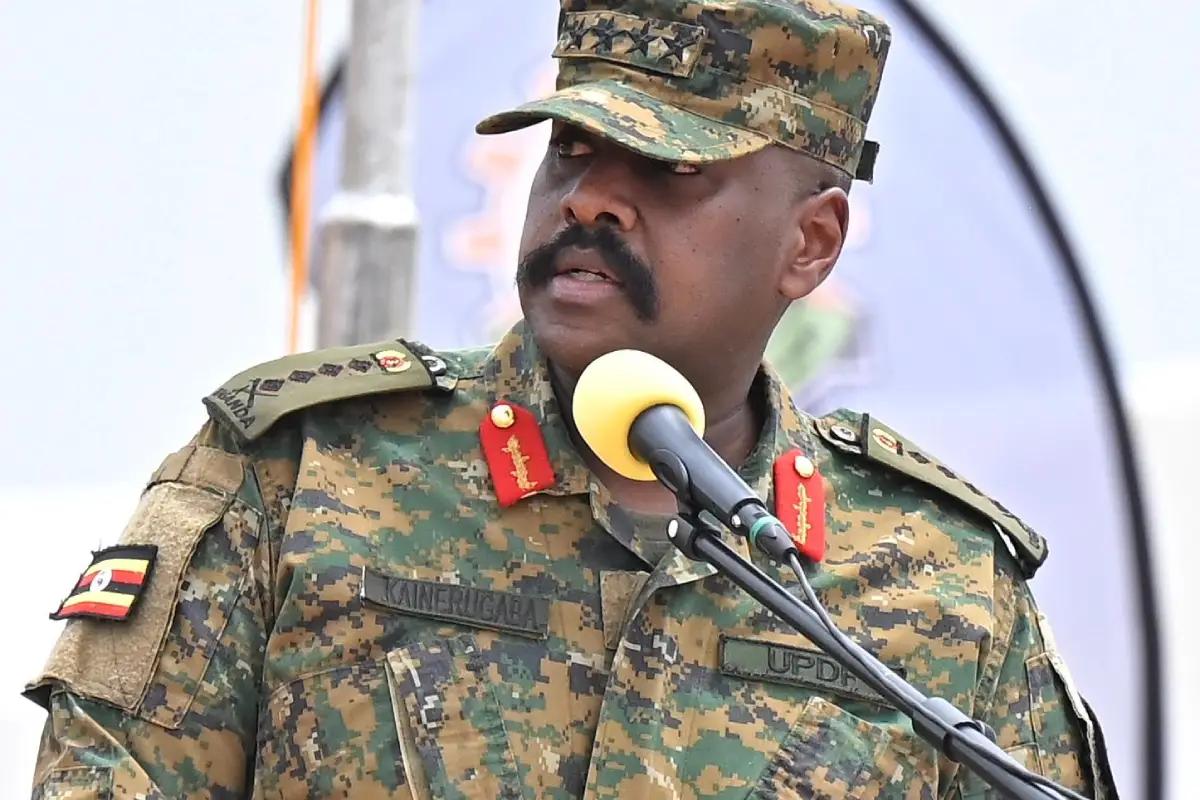

The writing is on the wall—and it is in black and white. The next five years after the January 15 election, which President Museveni won with a disputed landslide, will be largely about paving the way for General Muhoozi Kainerugaba to take over from his father.
The manoeuvring and jostling have started in real earnest. Gen Kainerugaba is playing an overtly political role even though, as a serving general, he is not allowed to do so. It will take something of a miracle for Uganda not to have a president from the Museveni family, once Mr Museveni leaves power.
And that is going to increase the years of the opposition in political wilderness and possibly pose an existential threat.
When Mr Museveni seized power in 1986, he banned political parties. Individuals seeking political office had to run on individual merit under his Movement system, an umbrella under which all Ugandans ostensibly belonged.
Parties returned after a referendum in 2005, but they are not free in the real sense. They also “face internal divisions and lack accountability and internal democracy”, as the Netherlands Institute for Multiparty Democracy once observed.
MORE FROM THE FOUNDER’S MIND SPACE
The opposition has been out of power for 20 years, and there is nothing to suggest this trend will change, especially if Gen Kainerugaba succeeds his father as president.
Key opposition figures still have steep odds stacked against them. The president of the National Unity Platform, Robert Kyagulanyi Ssentamu, popularly known as Bobi Wine, lost his second presidential election and is currently in hiding after security forces raided his home to place him under house arrest.
Many of his supporters are incarcerated on trumped-up charges. His party won fewer seats than in the 2021 election. His vice-president for the Buganda region, Muwanga Kivumbi, is facing terrorism charges after losing his parliamentary seat in a bitterly fought election. Seven of his supporters were killed in his house by security forces, allegedly for attempting to attack a police station.
It is not clear if Bobi Wine will contest the 2031 election. If he does, when the very system that has made it hard for him to win is still in place, he will be effectively wasting his time.
Bobi Wine had stepped into the shoes of Dr Kizza Besigye, who is currently languishing in prison on alleged charges of treason. The Forum for Democratic Change, which Dr Besigye led to three unsuccessful elections, has since splintered. The new party he formed, the People’s Front for Freedom, won only two parliamentary seats in the January elections.
His most prominent backers and colleagues, Ibrahim Ssemujju Nganda, and former Kampala mayor Erias Lukwago, both lost elections, and the government will likely work hard to ensure they remain in the political wilderness.
Six reasons you should trust what you read on this website—and share it with confidence
1. Led by experience that travels well
Our founder and editorial director, Musaazi NAMITI, brings more than two decades of serious newsroom experience, including eight years as an editor at Al Jazeera in Doha, Qatar, and consulting for the African Development Bank, UN agencies and Globe Media Asia in Cambodia. His global exposure anchors OJ-UGANDA.COM in professional rigour and fairness—standards that too often slip in Uganda’s crowded media space.
2. We fact-check with scientific precision
Verification is NOT a box we tick; it is how we bring journalism to life. We confirm spellings, dates, figures, places—every detail that shapes a story. If a fact looks shaky, we pause and probe. Emotion does not lead us; evidence does.
3. We are a legal entity and are fully registered
OJ-UGANDA.COM is a company registered with the Uganda Registration Services Bureau. Our registration number is: 80034266163714
4. Radical transparency in how we work
We do not hide behind mystery. We show readers how information is gathered, verified and edited. You will always understand why we stand by a story—because we will let you in on the process.
5. Accountability you can see
When we err, we do not sweep it under the carpet/rug. Our corrections policy ensures every error is corrected immediately, with a clear note explaining what went wrong and what has been fixed. No quiet deletions. No half-truths.
6. Fair treatment for contributors
If you write for us, your ideas remain yours. We refine, not usurp. We share every edited version before publication, and we publish only work that is fact-based and mutually agreed upon. Your voice stays authentic—and honest.
🔴We run a clean, professional news site that prioritises editorial quality and draws readers’ attention to what matters.
The opposition would have a chance of getting into power if presidential elections were free and fair. But there is nothing to suggest that if, as seems likely, old age forces Mr Museveni out of the presidency, Gen Kainerugaba will create a better environment for the opposition.
He will double down and ramp up repression. If he can brag about holding opposition supporters incommunicado and torturing them, what would stop him from harassing and persecuting even more to eliminate serious competition.
If Gen Kainerugaba stands in 2031 and wins the election, he is likely to follow his father’s path. He will then groom his son to take over from him. The Museveni dynasty will go from strength to strength. The opposition will be left with fond memories of drawing large crowds at campaign rallies without ever winning.
CORRECTION | January 31, 2026: An earlier version of this article erroneously stated that the PFF did not win any parliamentary seats in the January 15 election. It won two seats.
🔴 Musaazi Namiti is the Founder and Editorial Director of OJ-UGANDA. He previously led the Africa Desk at Al Jazeera in Doha, Qatar, worked for Globe Media Asia in Cambodia and writes a widely read column for Uganda’s Sunday Monitor. His work has been quoted by The New York Times, The Guardian, The Wall Street Journal, Jeune Afrique, The Africa Report—not for playing it safe, but for saying what others will not.