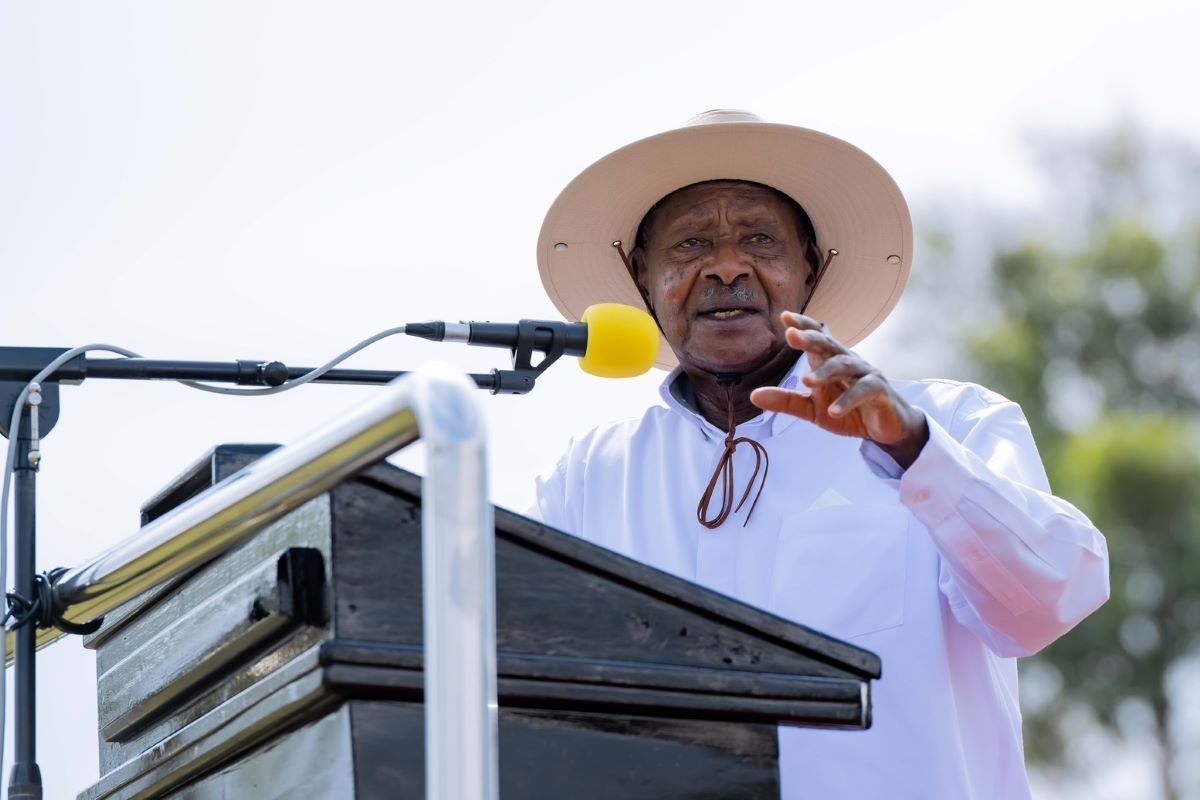

President Yoweri Museveni polled nearly eight million votes in the January 15 presidential election—a total that closely compares with the combined number of registered voters in Uganda’s 22 voter-rich districts (See our interactive map below).
Voter-rich districts are defined as administrative units with more than one million voters and no fewer than 200,000 voters. Kampala tops the list, followed by Wakiso, as our table shows.
The 22 districts have 8,356,517 voters, according to the Electoral Commission’s electoral data, a numerical comparison that stands out given Mr Museveni’s declared 71.65% victory.
The EC has not yet released the number of votes for each presidential candidate in every district. There are 146 districts.
Mr Museveni’s main challenger, Robert Kyagulanyi Ssentamu, aka Bobi Wine, of the National Unity Platform, won Kampala but finished a distant second with 24.72%. The election attracted eight presidential candidates.
Before the EC declared Mr Museveni the winner, Bobi Wine said security forces raided his home in Magere, Wakiso, 16km north of Kampala and placed his family under house arrest.
He said he managed to flee and recorded a video from an undisclosed location calling on Ugandans to reject the election results, which he called “fake”.
In his address to the nation a day after he was declared winner, Mr Museveni described his victory as “a good taste of the strength” of the ruling NRM, for which he has been chairman for nearly 40 years.
“The opposition was lucky,” he said. “10 million of my people did not turn up. They [the opposition] would have been embarrassed badly.”
Although Bobi Wine rejected the results, the African Union Commission chairperson, Mahmoud Ali Youssouf, congratulated Mr Museveni on his re-election.
The AU election observers noted, however, that “the internet shut down implemented two days before the elections limited access to information, freedom of association, curtailed economic activities.”
🔴 Brief But Hot brings you short, sharp takes on stories that are of great public interest—politically charged, emotionally raw or socially explosive. These are not long reads, but they pack a punch. When something happens that demands attention now, you will find it here.



You must be logged in to post a comment.