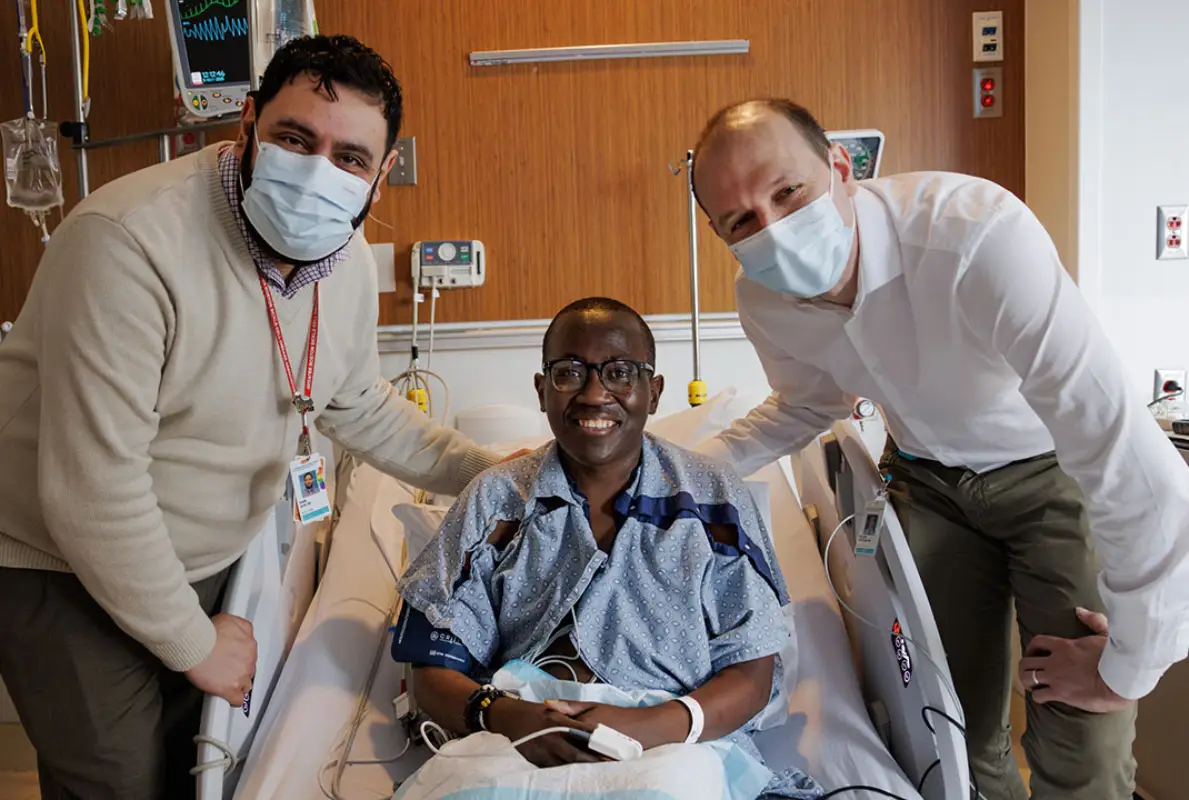

The news could not have been better for Allan Byamukama—and it was reported by several local news outlets. He was born with Sickle Cell Disease (SCD) and lived in excruciating pain for decades, but doctors have declared him free of the disease.
Sickle Cell Disease is defined as a group of inherited blood disorders that result in production of abnormal haemoglobin, a red substance in the blood that carries oxygen.
Red blood cells become hard and sticky and get stuck in small blood vessels, resulting in pain and other serious complications.
DIVE INTO PREVIOUS READS
There are several types of Sickle Cell Disease, some more severe than others, according to the US Centres for Disease Control and Prevention.
Mr Byamukama received treatment in Boston, Massachusetts, and doctors used gene therapy to get rid of Sickle Cell Disease.
But his treatment raises pertinent questions. To examine these questions, I will begin from the religious perspective. The Bible (Genesis 2:7) says: “Then the Lord God formed a man from the dust of the ground and breathed into his nostrils the breath of life, and the man became a living being.”
Psalm 139:13 adds: “For you created my inmost being; you knit me together in my mother’s womb.”
Six reasons you should trust what you read on this website—and share it with confidence
1. Led by experience that travels well
Our founder and editorial director, Musaazi NAMITI, brings more than two decades of serious newsroom experience, including eight years as an editor at Al Jazeera in Doha, Qatar, and consulting for the African Development Bank, UN agencies and Globe Media Asia in Cambodia. His global exposure anchors OJ-UGANDA.COM in professional rigour and fairness—standards that too often slip in Uganda’s crowded media space.
2. We fact-check with scientific precision
Verification is NOT a box we tick; it is how we bring journalism to life. We confirm spellings, dates, figures, places—every detail that shapes a story. If a fact looks shaky, we pause and probe. Emotion does not lead us; evidence does.
3. We are a legal entity and are fully registered
OJ-UGANDA.COM is a company registered with the Uganda Registration Services Bureau. Our registration number is: 80034266163714
4. Radical transparency in how we work
We do not hide behind mystery. We show readers how information is gathered, verified and edited. You will always understand why we stand by a story—because we will let you in on the process.
5. Accountability you can see
When we err, we do not sweep it under the carpet/rug. Our corrections policy ensures every error is corrected immediately, with a clear note explaining what went wrong and what has been fixed. No quiet deletions. No half-truths.
6. Fair treatment for contributors
If you write for us, your ideas remain yours. We refine, not usurp. We share every edited version before publication, and we publish only work that is fact-based and mutually agreed upon. Your voice stays authentic—and honest.
🔴We run a clean, professional news site that prioritises editorial quality and draws readers’ attention to what matters.
Religious people cite these verses to support their claim that life is our gift from God. If they are correct, they have to address the very uncomfortable question of why God would create different types of Sickle Cell Disease whose only purpose is to inflict severe pain and make life miserable for the sufferers.
Mr Byamukama was born 35 years ago in Uganda. If he had been born, say 20 years ago, in a developed country, his condition would have been detected—and managed—at birth by the power of science. How?
Modern hospitals conduct newborn blood spot tests to check if babies have any of 10 rare conditions, some of which can be life-threatening. Early detection means babies are monitored and treated.
Mr Byamukama said that when he moved to the US in 2015, gene therapy was still on trial. Then the US Food and Drug Administration approved it. His pain is history.
Had he relied on prayers, they would have done nothing to eliminate his pain. If he was from an underprivileged background, he would probably not be alive.
Key takeaway? God, prayers, and religion do not help humans fight disease. Science does.
🔴 Sunday Thought cuts through the noise of prayer, piety and superstition to ask the questions most people avoid. It discusses God, faith and religion—not to preach, but to probe, challenge and sometimes unsettle. Whether you believe, doubt or have stopped looking altogether, Sunday Thought will make you think, question and maybe even rethink everything you thought you knew about the divine—and about life itself.
CORRECTION: The original headline for this article had an incorrect name for the person featured. He is Allan Byamukama, not Allan Byabakama.