What the Electoral Commission actually says
The geographical size has not changed. Some of the districts are very small geographically. Some candidates can campaign in more than one district, and they are not required to campaign in every district.
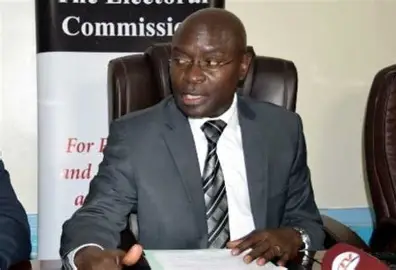
According to the Electoral Commission (EC), Uganda’s 147 districts were created from the original 33, and the country’s geographical size remains the same.
The EC also says presidential candidates agreed to the current campaign programme.
Key point: Uganda’s 147 districts do not mean 147 new destinations since they are administrative fragments of the same land area.
What we verified with the EC
- Uganda’s total geographical area has not increased.
- The 147 districts were created from 33 original ones.
- Candidates are not required to campaign in every district.
- The campaign programme was agreed upon by candidates.
What this means for campaign coverage
The earlier assumption—that 108 days cannot cover 147 districts—no longer holds.
Since district boundaries often overlap within the same region, one rally can attract voters from several adjoining districts.
For example, a single event in Kyotera could draw supporters from Rakai and Masaka districts—and in Mbarara, draw supporters from Rwampara and Isingiro.
What this suggests
- 108 days may still be tight, but not impossible.
- Strategic planning (where to campaign first, which regions or voter groups to prioritise) can extend reach.
- Administrative boundaries do not mean geographical barriers.
Why the EC chose 108 days and not, for example, 90
The EC cited section 22, clause 1, of the Presidential Elections Act, which mandates it to determine the manner and the period during which the campaigns shall take place.
However, analysts and election observers (not the EC) suggest possible reasons:
- Cost control: Longer campaigns mean higher security and logistics expenses.
- Governance continuity: Extended campaigns can slow normal government work.
- Security and fatigue: Prolonged campaigns can heighten political tension.
Note: These points represent independent analysis, not the EC’s official position.
The debate beyond geography
Critics acknowledge that Uganda’s physical size has not changed—but argue that political expectations have.
Each new district has its own leaders and voters who expect campaign visits. When candidates skip them, voters may feel sidelined.
Opposition figures also contend that shorter campaigns favour incumbents, who already enjoy nationwide visibility through state events and public media.
Reaching every voter: What reformers propose
Since physical rallies cannot reach everyone, fair media access becomes essential.
Reform advocates—again, not the EC—suggest measures such as:
- Free, equal airtime for all presidential candidates on state radio and TV.
- Transparent campaign finance rules to prevent money from buying visibility.
- Joint or regional rallies so candidates reach voters across multiple administrative districts.
Why this matters:
These reforms focus on equal voter access, not simply longer campaigns.
The bottom line
The EC’s clarification reshapes the debate: Uganda’s 108-day campaign is not about racing across 147 separate territories but engaging voters within largely unchanged boundaries.
- READ: Presidential candidates since 1996–2026: Bobi and Besigye have been Museveni’s serious challengers