
Last June, officials at Mulago, Uganda’s national referral hospital, told parliament that they needed shs2.5bn to fully operationalise the Intensive Care Unit. They said the deficit meant the unit was operating at half capacity, endangering lives of patients who have to be treated there.
The matter was discussed with parliament’s Public Accounts Committee, and the hospital director, Dr Rosemary Byanyima, told MPs that most of the issues raised were not new. Many, she said, had already been documented.
Four months earlier, the permanent secretary at the Ministry of Health, Diana Atwine, had told the Parliament’s Health Committee that public health facilities were struggling with huge water bills and that they had been disconnected for non-payment. She said they should start using boreholes.
These stories give the impression the government, which recently went to Stanbic Bank for a loan to buy out Umeme after its concession to distribute electricity expired this past March, is strapped for cash.
But you would be naive to believe this narrative given credible news reports in newspapers and on social media about MPs receiving shs100m each from the government with no official explanation.
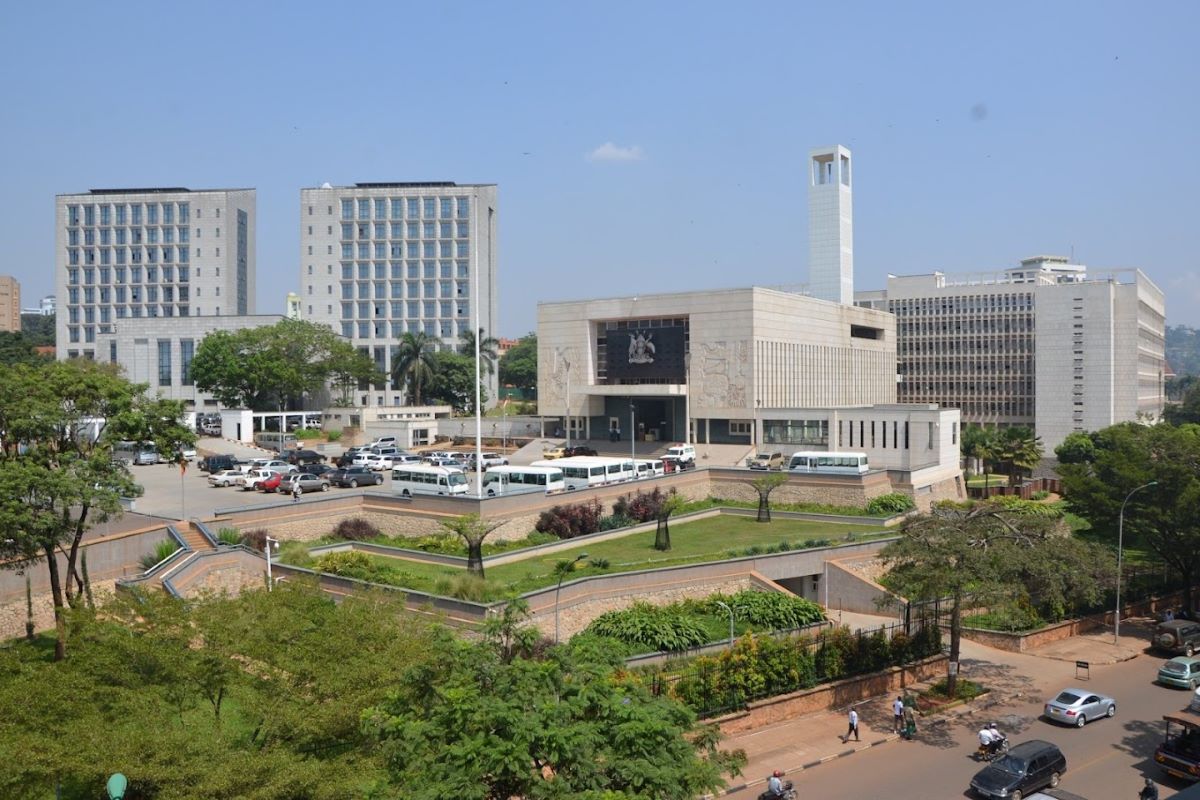
Daily Monitor reported that the recipients are mainly MPs who got elected on the ticket of the governing NRM. The party has more that 300 MPs, and if it is true that they all received the cash, the total sum—upwards of shs30bn—is much more than what you need for Mulago’s ICU and the water bills for public health facilities.
The money has been doled out in a hush-hush manner, raising suspicion. Officials at parliament whom journalists tried to speak to were either non-committal or pretended they were not aware of the cash hand-outs. You do not do that when you know for sure that there are compelling reasons for the MPs to receive the money.
A former MP who declined to be named because of their ties with serving MPs told OJ-UGANDA that NRM MPs received the money in their bank accounts while opposition MPs had to collect it from the office of the government Chief Whip, Denis Hamson Obua—“with cameras watching”, the source added.
The money has been doled out in a hush-hush manner, raising suspicion. Officials at parliament whom journalists tried to speak to were either non-committal or pretended they were not aware of the cash hand-outs. You do not do that when you know for sure that there are compelling reasons for the MPs to receive the money.
It is hard to believe this is a random coincidence. Elections are only months away, and the governing NRM appears to be desperately trying to buy support. In fact, the party is doing what it did 20 years ago when it bribed many MPs with shs5m each to remove term limits from the constitution to enable President Museveni to seek re-election ad infinitum.
The MPs succeeded. And they made another amendment in 2017 that removed the age limit for the president. Since 2006, Mr Museveni, in power for 39 years, has contested several elections that should have been held with him ensconced in retirement.
The latest cash bonanza, as the media is calling it, shows how Mr Museveni and his henchmen are using public funds as they wish, unbothered about accountability and the fact that the recipients are already some of the best-paid people in Uganda.
While Ugandans keep complaining about the needlessly large number of MPs (there are more than 500) for a country of 45 millions people, the government seems determined to spend even more on MPs.
If Mulago’s ICU does not work, that is none of the politicians’ business. And it is all too easy to see why they are not bothered. Mulago is rarely used by politicians. Many top NRM politicians and officials seek medical care from private hospitals.
Former Speaker of Parliament Rebecca Kadaga and minister for East African Community Affairs was in 2019 treated at Nakasero Hospital when she was critically ill. Ofwono Opondo, who until recently headed the Media Centre, the chief propaganda organ of the NRM, has also been treated at the same hospital, as Rose Namayanja, the party’s deputy secretary general.
For ordinary Ugandans, the writing is on the wall. The government will pile pressure on the Uganda Revenue Authority to aggressively collect taxes. There are consequences if you do not pay your taxes, but if you pay, do not expect the services you want. The president’s main preoccupation is how he can extend his almost 40-year rule. Even if it means spending all the money in the treasury to achieve this goal, so be it.
🔴 Musaazi Namiti is the Founder and Editorial Director of OJ-UGANDA. He previously led the Africa Desk at Al Jazeera in Doha, Qatar, worked for Globe Media Asia in Cambodia and writes a widely read column for Uganda’s Sunday Monitor. His work has been quoted by The New York Times, The Guardian, The Wall Street Journal, Jeune Afrique, The Africa Report—not for playing it safe, but for saying what others will not.
Email: musaazinamiti@ojuganda.com
X: @kazbuk