
Musaazi NAMITI | The Founder’s Mind Space
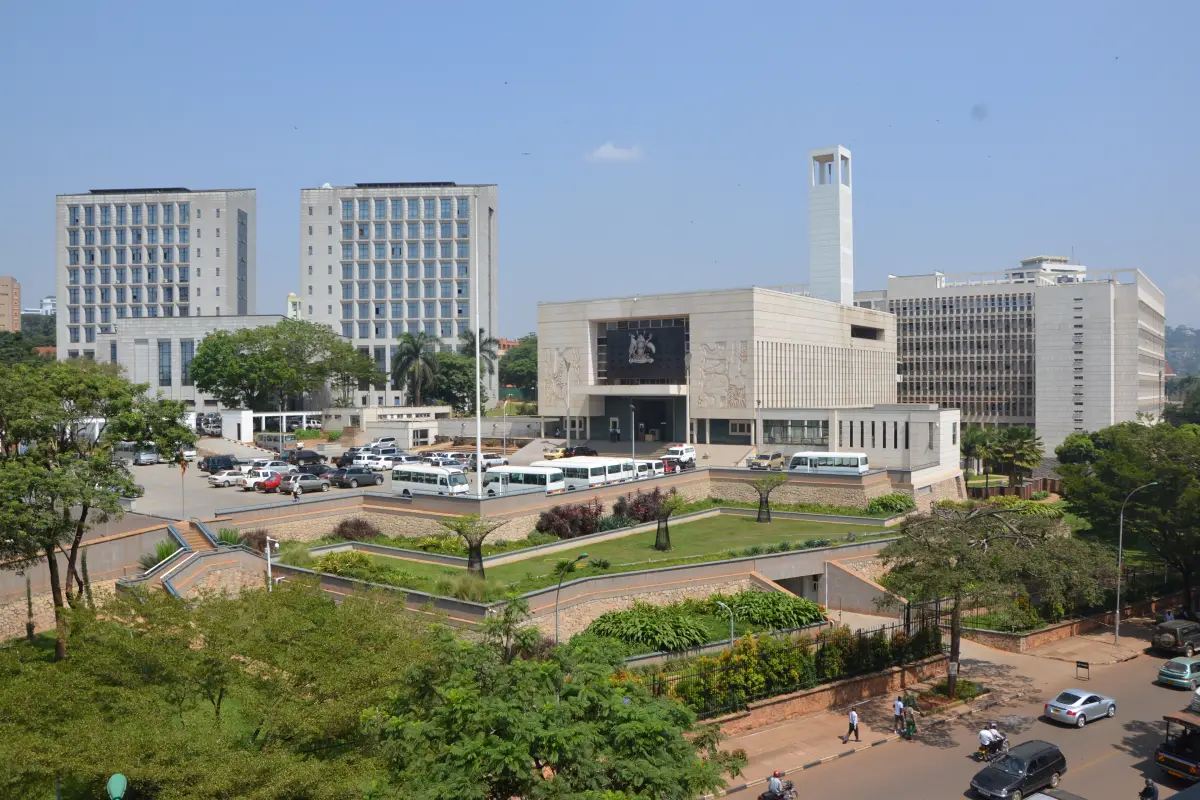
Parliament has a new Speaker, Jacob Marksons Oboth-Oboth, the MP for West Budama Central County. His candidature took many by surprise. Only weeks ago, the frontrunner was embattled former Speaker Anita Among. She had the backing—or so it seemed—of President Museveni, the chairman of the governing NRM’s Central Executive Committee.
What is more, she was the favourite of many MPs. In several video clips circulating on social media, Ms Among spoke confidently of her chances of re-election.
During her party’s retreat at Kyankwanzi National Leadership Institute in April, she told Norbert Mao, the MP for Laroo-Pece Division who had thrown his hat into the ring, that he was attempting to enter her “bedroom” uninvited, a reference to her role as Speaker.
The odds were very much in her favour. After all, previous Speakers from the NRM had served two consecutive five-year terms, which was beginning to look like a tradition.
Then corruption allegations against Ms Among resurfaced. The government launched a probe into her riches, and her party endorsed another candidate.
That candidate, the new Speaker, won the election with a landslide, polling 441 votes against 60 for the National Unity Platform’s Paul Mwiru and 15 for the Democratic Party’s Mao. Mr Mao, who happens to be the Minister of Justice and Constitutional Affairs, is the only opposition politician serving in Mr Museveni’s government.
Unlike presidential elections that are often marred by irregularities, the election for Speaker is hard to rig. And the result is usually a foregone conclusion: The NRM boasts numerical strength, and any candidate it endorses has high chances of winning.
NUP’s Mwiru did relatively well given the fact that the party has 46 MPs. His tally suggests he attracted support beyond his party ranks. Mr Mao, meanwhile, got the same number of votes Ibrahim Ssemujju, the outgoing Kira Municipality MP, polled in the 2021 speakership election.
Six reasons you should trust what you read on this website—and share it with confidence
1. Led by experience that travels well
Our founder and editorial director, Musaazi NAMITI, brings more than two decades of serious newsroom experience, including eight years as an editor at Al Jazeera in Doha, Qatar, and consulting for the African Development Bank, UN agencies and Globe Media Asia in Cambodia. His global exposure anchors OJ-UGANDA.COM in professional rigour and fairness—standards that too often slip in Uganda’s crowded media space.
2. We fact-check with scientific precision
Verification is NOT a box we tick; it is how we bring journalism to life. We confirm spellings, dates, figures, places—every detail that shapes a story. If a fact looks shaky, we pause and probe. Emotion does not lead us; evidence does.
3. We are a legal entity and are fully registered
OJ-UGANDA.COM is a company registered with the Uganda Registration Services Bureau. Our registration number is: 80034266163714
4. Radical transparency in how we work
We do not hide behind mystery. We show readers how information is gathered, verified and edited. You will always understand why we stand by a story—because we will let you in on the process.
5. Accountability you can see
When we err, we do not sweep it under the carpet/rug. Our corrections policy ensures every error is corrected immediately, with a clear note explaining what went wrong and what has been fixed. No quiet deletions. No half-truths.
6. Fair treatment for contributors
If you write for us, your ideas remain yours. We refine, not usurp. We share every edited version before publication, and we publish only work that is fact-based and mutually agreed upon. Your voice stays authentic—and honest.
🔴We run a clean, professional news site that prioritises editorial quality and draws readers’ attention to what matters.
The results point to one thing: The opposition, even if it won the presidency, would have a hard time passing legislation in a Parliament controlled by the NRM.
The opposition has repeatedly complained about an unlevel playing field, arguing that it makes it difficult to dislodge the NRM from power. However, the speakership election suggests that even if this obstacle was removed, opposition candidates would still need to convincingly win not only the presidency, but also enough seats in Parliament.
It is not enough to win the presidency when you do not have strong representation in Parliament. Numerical strength matters because it transcends the plenary and goes to committees.
If the NUP was in power with its current number of MPs, it would see the NRM dominate committees, where bills are scrutinised, amended, delayed or buried before reaching full debate. This means even a reform-minded opposition president could find their agenda slowed at committee stage.
The NRM’s dominance now appears structural, not merely electoral: patronage networks, incumbency and numerical strength reinforce one another cycle after cycle.
Many have complained about Mr Museveni getting involved and making a point of observing the election. However, the bigger issue remains the NRM’s overwhelming numerical advantage in Parliament. A secret ballot gives MPs room to vote differently from the party position, but the final outcome still largely reflects the ruling party’s dominance in the House.
As the 12th Parliament embarks on its term, the opposition has to brace for what has happened over the years: unpopular laws getting passed because the ruling party had numerical strength. While the opposition’s focus remains on the presidency, the quest for more parliamentary seats may prove just as critical.
CLICK ON THE ARROW TO READ MORE FROM MUSAAZI NAMITI
🔴 Musaazi Namiti is the Founder and Editorial Director of OJ-UGANDA. He previously led the Africa Desk at Al Jazeera in Doha, Qatar, worked for Globe Media Asia in Cambodia and writes a widely read column for Uganda’s Sunday Monitor. His work has been quoted by The New York Times, The Guardian, The Wall Street Journal, Jeune Afrique, The Africa Report—not for playing it safe, but for saying what others will not.